

 By
By 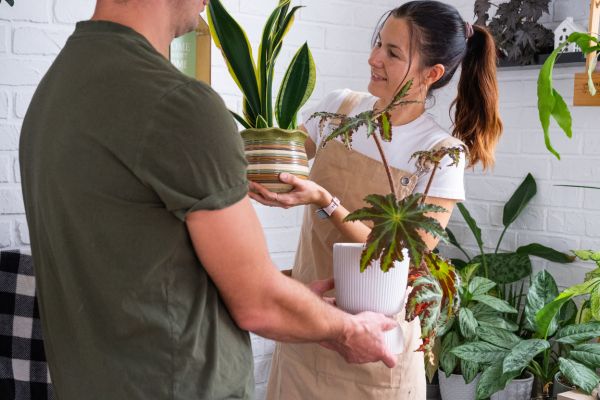
We live in a time where almost every emotion has a shopping solution.
Feeling low? Order something.
Celebrating? Add to cart.
Want to impress? Upgrade.
Want to belong? Wear the brand.
Somewhere quietly, without us even noticing, we started confusing consumption with connection. But if you pause and really observe life — not marketing, not social media, not festive sales — you’ll notice something profound. Communities do not grow because people buy the same things. They grow because people share what they have. Sharing existed long before currency. Long before brands. Long before “limited-time offers.” And even today, it remains more powerful than any discount season.
The best way to find yourself is to lose yourself in the service of others.”
– Mahatma Gandhi
Buying Creates Transactions. Sharing Creates Trust.
Buying is efficient. Sharing is intimate. When you buy something, the exchange ends at payment. When you share something, the exchange begins with trust. Think about the homes we grew up in. Borrowing sugar from a neighbor. Passing around cricket bats. Exchanging homemade sweets during festivals. Those gestures were never about material value. They were about openness. They were about saying, “You are welcome here.”
You don’t feel connected to someone because they bought the same gadget as you. You feel connected because they showed up when you needed something. Trust compounds over time. Transactions don’t. A mall can gather a crowd. But it cannot build a community.
Ownership Is Heavy. Participation Is Light.
We are taught to own more, upgrade more, store more. But ownership often isolates us. The more self-sufficient we become materially, the less interdependent we become socially. And community thrives on interdependence. When we share, we participate. We circulate value. We allow something to move from “mine” to “ours.” There is a psychological shift here. Sharing signals abundance. It says, “I have enough to let this flow.” And abundance attracts collaboration.
Scarcity thinking says protect and accumulate.
Community thinking says circulate and contribute.
That’s why tool libraries, book exchanges, skill-sharing circles, even informal carpool groups feel so alive. They are not marketplaces. They are ecosystems. In ecosystems, value moves.
The Illusion of “More”
Modern growth is measured in sales numbers. But real community growth is measured in reciprocity. Ask yourself honestly — when did you last feel deeply connected to someone?
Was it because you both bought something similar?
Or because you helped each other when it mattered?
Buying the same phone does not create intimacy. Lending your charger when someone’s battery is dying does. The more we accumulate individually, the less we rely on one another. And the less we rely on one another, the weaker the social fabric becomes. A society that only buys together rarely stands together.
Sharing Reduces Waste — and Emotional Distance
There is a sustainability angle here, yes. When we share:
- Fewer items sit unused.
- Fewer resources are wasted.
- Fewer things end up in landfills.
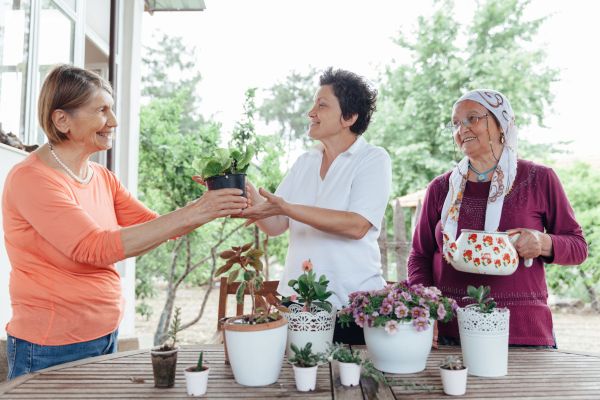
But beyond the environmental benefit, something more subtle happens. Sharing makes people feel seen. When you give away a book that shaped you, or a plant that outgrew your balcony, or even something as simple as an unused appliance, you are transferring more than an object. You are transferring story. Memory. Relevance. Buying something new rarely carries history. Sharing always does. In a world overflowing with production, sharing is not just eco-conscious. It is emotionally intelligent.

Communities That Share Are More Resilient
If the last few years have taught us anything, it is this: resilience is not built through purchasing power. It is built through shared networks. During crises, what sustains people? Not their shopping carts. It is their community.
Neighbors checking in. Friends pooling resources. Families coordinating support. Informal networks forming quietly and organically. Communities that practice sharing before they need to survive are the ones that endure uncertainty with strength. Because trust is already present. Systems of exchange already exist. Resilience is a habit, not an emergency response.
Digital Spaces: Buy More or Connect Better?
Technology today has enormous power. It can either deepen isolation or strengthen collaboration. Most platforms are designed around selling — products, influence, attention. They amplify comparison and consumption.
But what if digital ecosystems were designed around circulation instead of accumulation? What if they made it easier to pass things forward? To express preferences transparently so gifts are intentional? To give away what we no longer use instead of hoarding it? Technology doesn’t have to accelerate consumerism. It can amplify conscious community. But only if we choose that direction.
Sharing Builds Identity Through Contribution
Buying signals taste. Sharing signals character. One builds image. The other builds reputation. Communities grow when people are valued for what they contribute — not what they consume. Contribution does not have to be grand. It can be time, skill, introduction, advice, encouragement, or an object that still holds value.
In a sharing culture, everyone has something to offer. Hierarchies soften. Inclusivity rises. Buying separates people into economic tiers. Sharing reminds us of our shared humanity.

The Fear Behind Not Sharing
Let’s be honest. Sometimes we hesitate to share because we fear loss.
What if I need it later?
What if it doesn’t come back?
What if I reduce my own comfort?
But unused value is already lost value. An appliance sitting unopened in a cabinet serves no one. A book untouched on a shelf creates no insight. A dress worn once and forgotten does not extend its life. Circulation multiplies utility. And relational equity — the goodwill built through sharing — often outlasts material ownership.
Redefining Growth
Perhaps the real shift we need is not from buying to not buying. It is from unconscious buying to conscious sharing.
Growth is not more storage.
Growth is more trust.
Growth is not more accumulation.
Growth is more collaboration.
Communities grow when members feel secure enough to say, “I have enough. Let me contribute.” Abundance is not measured by how much we hold. It is measured by how freely we can let value move.

A Reflection to Close
Ultimately, the shift from buying to sharing is not about rejecting markets or discouraging economic growth. It is about rebalancing what we value. Consumption can create convenience, but sharing creates cohesion. When individuals choose to circulate resources, express needs clearly, and contribute intentionally, communities become stronger, more resilient, and more sustainable. The question is not whether we should stop buying, but whether we can start sharing more consciously. Because over time, it is shared value — not accumulated goods — that builds trust, reduces waste, and sustains human connection. And that is the kind of growth that endures.















What do you think?